The Nuad Thai tradition
Known in Thailand as Nuad Thai, this practice is connected to local traditions of care and health. Knowledge passed through families and communities gradually developed into professional training. In 2019, Nuad Thai was inscribed on UNESCO's Representative List of the Intangible Cultural Heritage of Humanity. This recognises the tradition's cultural importance and preservation; it does not scientifically validate every treatment claim.
Thai massage has different training traditions. Some place greater emphasis on pressure techniques, while others feature more stretching and changes of position. Traditional explanations refer to “sen” lines running through the body. This concept belongs to that system of knowledge and should not be equated with an anatomical map of nerves or blood vessels. What the client directly experiences is the pressure, the direction of movement and the extent of a stretch.
Applying pressure
Thai massage may use palms, thumbs and, in some techniques, forearms, elbows or other contact surfaces. Broad pressure from the hand feels different from focused work on a smaller area with a finger. Movements often establish a rhythm of applying pressure, gradually releasing it and moving to the next area. Long gliding strokes may play a smaller role than they do in oil massage.
A practitioner using their body weight does not necessarily mean heavy pressure. The way the load is distributed, the contact area and the pace all affect the sensation. Pressure that feels comfortable on a leg may not feel equally pleasant on a shoulder. Choosing “medium pressure” once at the start does not automatically make every subsequent movement suitable. Reassessing pressure when moving to a sensitive area is normal.
The character of assisted stretching
During a stretch, the practitioner supports an arm, leg or the torso and guides it in a particular direction. The client allows the movement without deliberately tensing the muscles. You do not need to be very flexible beforehand. What matters is respecting the body's current range of motion. Stretches can also be performed through a small range.
The stretching sensation should build gradually and should not interfere with comfortable breathing. A movement should stop if it produces sharp pain, an electric-shock-like sensation or numbness. Previous injuries or instability in the knees, hips or shoulders are particularly important to mention.
Mat, clothing and positions
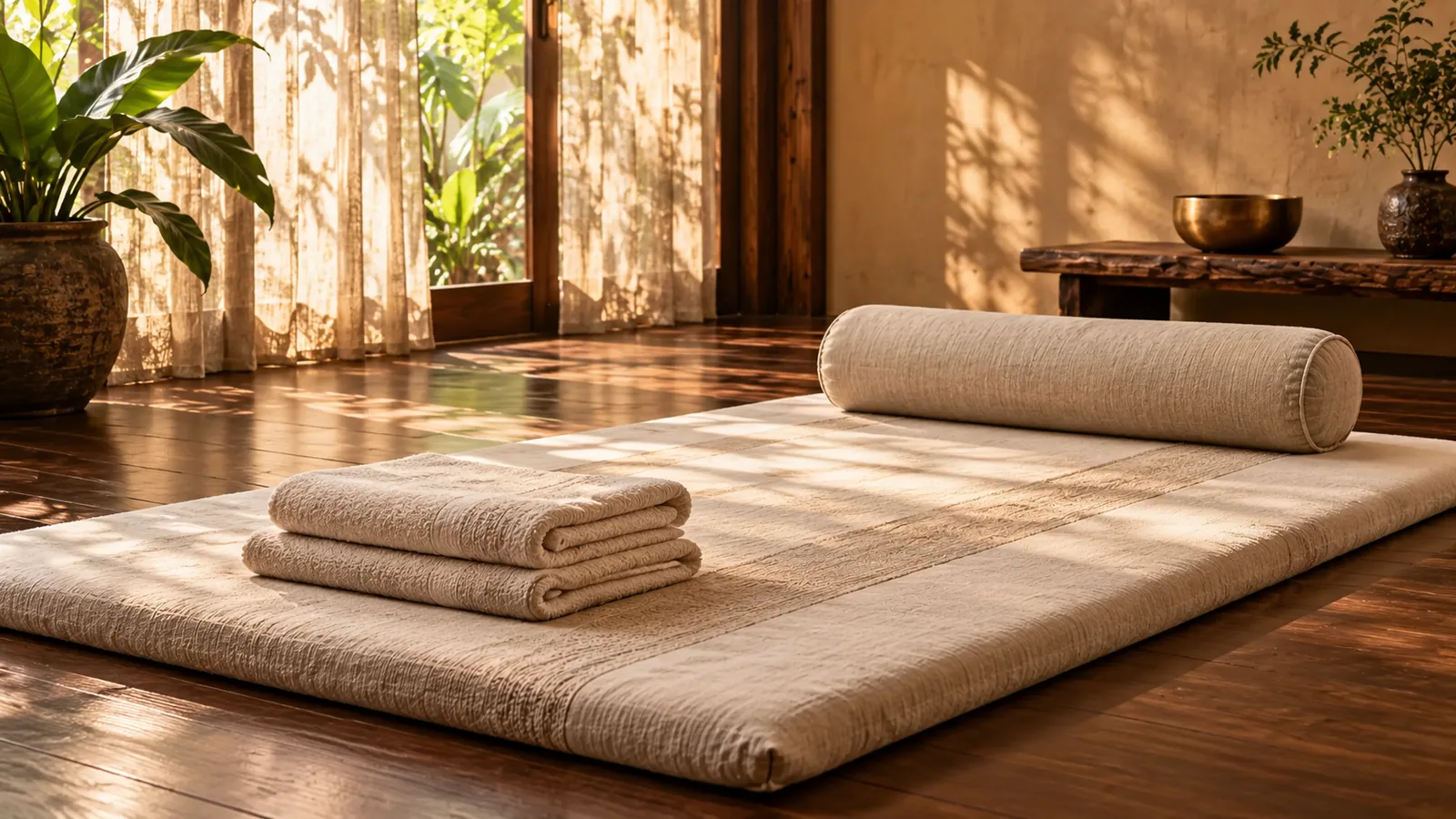
A firm, comfortable floor mat allows the practitioner to move around the body and support different movements. Some settings also offer versions of Thai massage adapted to a table. Mention any difficulty getting down to the floor or standing up again. The setting can be clarified when booking.
Clothing should allow the knees and elbows to bend and the arms to move freely. A stiff belt, tight jeans or large metal details can be uncomfortable under pressure. Comfortable trousers and a top are more practical. A session may use positions lying on the back, side or front, as well as sitting, but it does not have to include all of them. Where extra support is needed for the head, knees or lower back, the position should be adjusted accordingly.
The experience and realistic expectations
Thai massage may appeal to someone who enjoys having the body moved and experiencing stretches. Some people report feeling rested and moving more freely afterwards. These are individual experiences. A single session cannot be promised to create lasting flexibility, correct posture or remove the cause of persistent pain. Everyday movement, exercise habits and medical assessment when needed remain separate considerations.
A service described as Thai oil massage may also differ from the traditional clothed format. Herbal compresses and other additions are included in some sessions but not others. These change the experience: an oil-based format features more gliding, while the traditional clothed format places greater emphasis on compression and assisted movement.
Respecting movement limits
Standard stretches may be unsuitable following a recent injury or operation, with fragile bones or during pregnancy. Health conditions should be discussed beforehand and suitability checked with a clinician where needed. The practitioner may omit particular movements or postpone the session. Any technique can be declined during the appointment.
Thai massage takes its character from the alternation between pressure and movement. Moving from steady palm pressure to a supported leg movement makes the session an experience of both touch and the body's changing positions.