The particles and the base
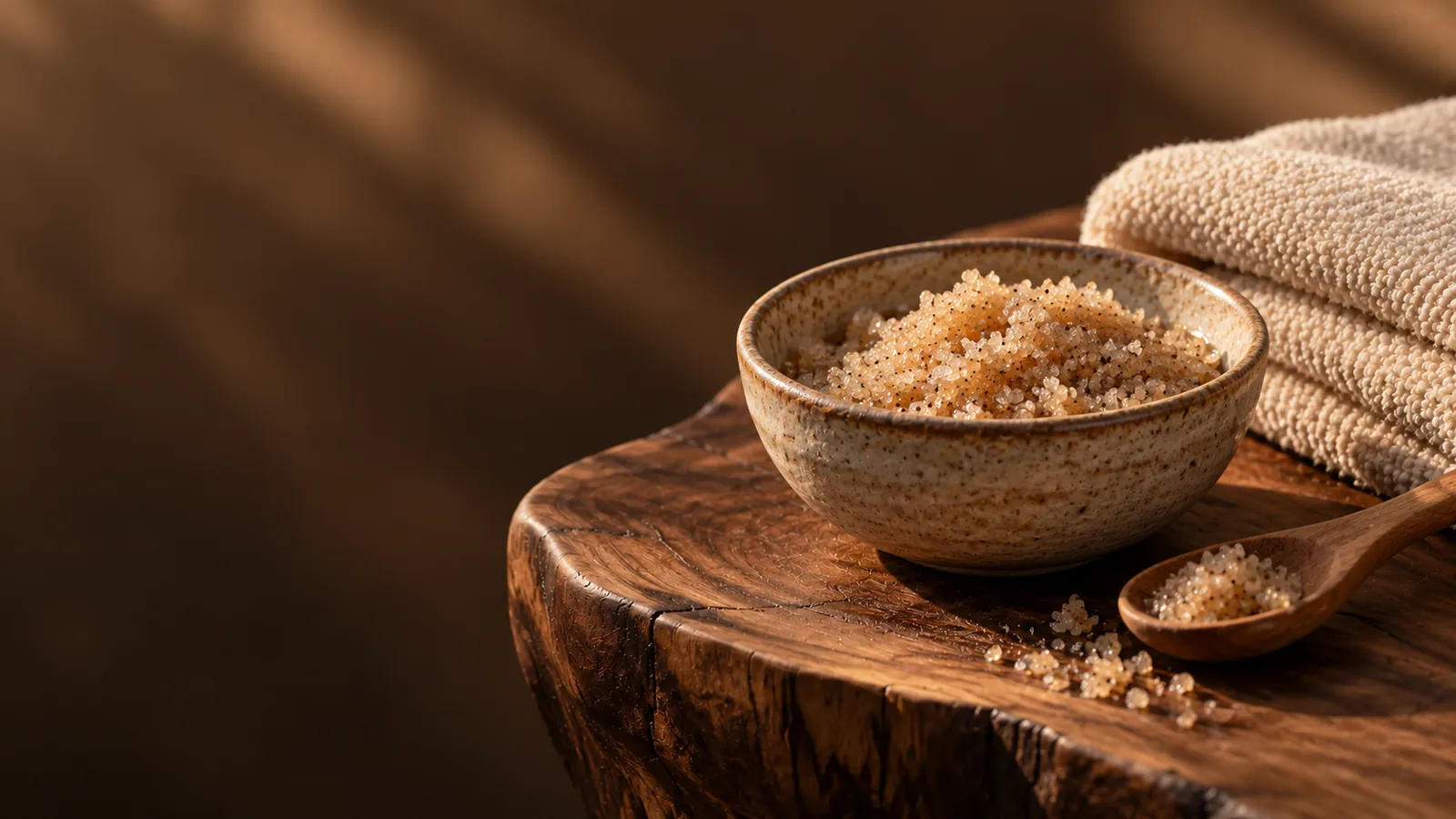
Scrub formulas vary. Salt, sugar and other particles may be blended into different oil or cream bases. An ingredient list helps explain a product’s character, but one ingredient alone does not determine how the whole formula will feel on the skin. The size, shape and quantity of the particles, along with the rest of the formula, also matter.
There is no need to look for the largest grains or the strongest friction. Light movements with a product that spreads comfortably allow more controlled care. Mention sensitivity to fragrances or botanical ingredients beforehand. The word “natural” on a label does not rule out an allergic reaction. Describing what you want from the product and which formulas have previously caused discomfort helps with selection.
How does application feel?
In a typical treatment, the product is spread over selected areas and worked with small, light movements. Residue is then removed, and a suitable moisturiser may be applied. The exact sequence depends on the product instructions and the format of the service. Before booking, it can help to ask how the scrub is removed, whether a shower is needed and whether other care stages are included.
Feeling the particles is normal, but burning or a scratching sensation should not occur. Pressure may need adjusting, particularly behind the knees, inside the elbows and on other sensitive areas. The same force and duration will not suit every part of the body. An uncomfortable area can be skipped, or treatment there can stop.
A granular body product should not automatically be assumed suitable for the face. Facial and body skin differ in sensitivity, and products are designed for different areas. When choosing full-body care, clarify whether facial care is a separate stage. If several products are involved, knowing where each will be used can make the experience more comfortable.
Matching intensity to the skin
Dry, sensitive and acne-prone skin may react more readily to physical exfoliation. Skin condition also changes with the seasons, skincare products and recent procedures. A scrub that previously felt comfortable may irritate on another occasion. Paying attention to the current condition is more useful than relying on “I have always done it this way.”
Mention retinol, prescription retinoids and any acne treatments you use. Combining several exfoliating methods on the same area may increase irritation. Aggressive rubbing requires particular caution if your skin tends to develop dark marks. A dermatologist can help select appropriate care when rashes, flaking or itching persist.
What creates the feeling of softness?
The smooth feeling after a scrub comes from surface care. A moisturising product may also contribute. When judging the experience, consider not only the immediate appearance but also how the skin feels a few hours later. Tightness, burning or lingering redness may mean that a gentler approach, or no exfoliation, would be better next time.
Some people enjoy granular products; for others, simple washing and moisturising are enough. A scrub is not an essential step for every skin type. If softness is your only goal, saying so helps tailor the intensity. Comfort and continuing suitability are better guides in skincare than a strong sensation on one occasion.
Details to consider beforehand
Consider the appointment alongside hair removal, shaving, peels and other skin procedures. The interval needed depends on the method and your skin’s response; the practitioner providing that procedure can clarify it. Scrubs should not be applied to sunburned or already irritated skin. Point out open wounds or scratches in advance.
After the treatment
Lukewarm water and an appropriate moisturiser provide a gentle continuation of surface care. Avoid rushing into another vigorous rub with an exfoliating mitt, brush or scrub on the same day. Keep everyday sun protection in mind for exposed areas. If burning persists or a noticeable rash or pain develops, stop using the product and seek medical advice.
Choose the timing of the next session according to your skin’s response. One frequency does not suit everyone, and more intensive exfoliation may require a longer interval. A well-suited scrub massage leaves you clear about how the product feels, which areas are sensitive and what care follows. Keeping the skin comfortable is as important a sign of quality as leaving it soft.