Honey's role in the technique
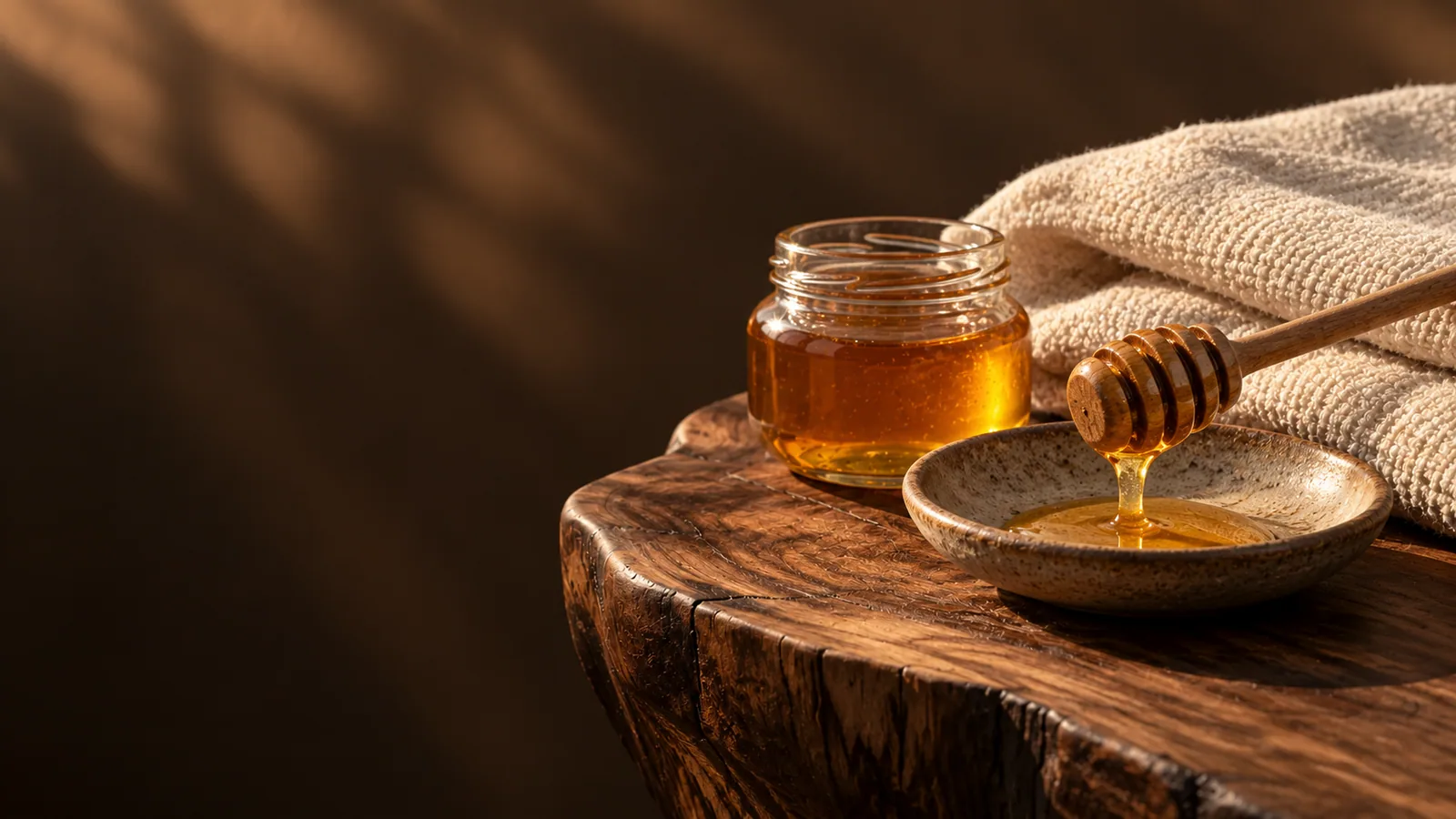
The most noticeable properties of honey during massage are its thickness and stickiness. Once spread on the skin, it creates a distinctive resistance against the practitioner's hands. As the palm makes contact and lifts away, this resistance may be felt as a surface-level pulling sensation. The consistency of the lifting rhythm, the size of the area being worked and the condition of the product all affect the experience. Describing the ingredients in honey alone does not explain this treatment; its distinctive feature is the sensation produced by the material and hand movements together.
In some versions, a thin layer of honey is spread first, followed by repeated contact-and-release movements. Others rely more on conventional massage strokes with a honey-containing product. These do not feel the same. Clarifying which technique a provider means by “honey massage” helps set expectations. Someone interested in trying the sticky contact may make a different choice from someone looking for gentle gliding strokes.
Stickiness and the feeling of touch
As honey is worked on the skin, its consistency and appearance may change. As it becomes stickier, the release of the hand becomes more noticeable. At this stage, the pace and contact area may need to be adjusted. If a touch that was comfortable at the beginning starts pulling the skin too much, it is useful to say so straight away. A sensation on one area is not a measure for the whole body: contact that feels acceptable on the back may be uncomfortable elsewhere.
Some people enjoy this superficial pulling sensation; others do not. Body hair and individual preferences about touch can change the experience. Whether the palm uses a broad or smaller contact area, and how quickly the hand lifts away, also affect how the touch feels.
Product choice and hygiene
The ingredients of the product should be known beforehand. Pure honey is not the same as a cosmetic mixture containing honey, fragrance, oil and other ingredients. What else is in the product matters particularly for sensitive skin.
Because honey leaves a sticky residue, removing it at the end is an important part of the treatment. A method that avoids irritating the skin should be used rather than vigorous rubbing. Clean towels and other materials matter just as they do in other massage treatments. Product should be portioned for individual use, and anything that has touched the skin should not be returned to the shared container. Honey's properties as a stored food do not replace salon hygiene.
Skin care and medical use are different
Honey is used as a moisturising ingredient in some cosmetic products. A person may notice that their skin feels softer after massage, but this should not be presented as lasting skin renewal or treatment for a specific condition. How the skin feels depends on all the products used, the touch and the subsequent cleansing. A pleasant feeling after one session does not establish a long-term cosmetic result.
Certain medical wound dressings use specially prepared, sterilised and tested honey. This is separate from honey massage in a spa. Findings about medical-grade honey cannot simply be applied to ordinary honey spread on the skin during massage.
Changes in the honey's appearance
Honey becoming pale or greyish during the treatment is sometimes explained as “toxins leaving the body”. A change in appearance does not prove this. Physical changes to the material and mixing with substances on the skin's surface can also affect its appearance. Colour cannot identify which substance is in the body or how much has been removed.
There is no reliable clinical evidence that honey massage detoxifies the body, melts fat or eliminates cellulite. Such promises are not needed to appreciate its distinctive features: the texture of honey, rhythmic hand contact and a different body-care experience. Whether the sensation is enjoyable and how the skin responds are more realistic ways to judge its suitability.
Skin condition and safety
With a known allergy to honey or bee products, suitability should be discussed with a healthcare professional; a known allergen should not be applied. Massage should not be performed over an open wound, infection or active irritation. Movements should stop if they cause sharp pinching or burning. Persistent itching, a rash or pain afterwards should prompt medical advice rather than being accepted as a normal result.