How are stones used in massage?
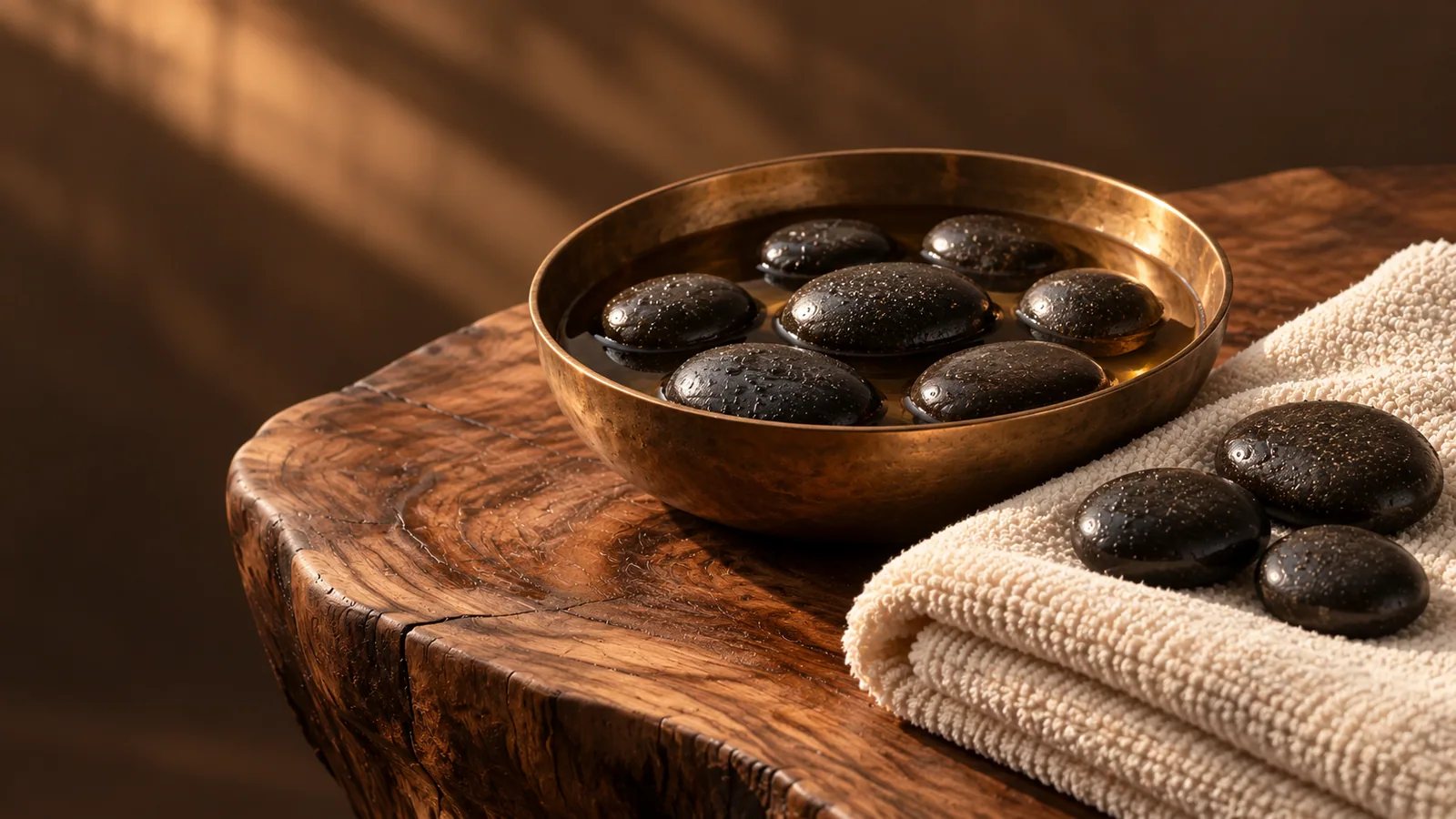
Two applications can feature in a hot stone session: stones that are moved and stones that remain in place for a time. In the first, the stone is a massage tool. The practitioner holds it, guides it along a selected area and controls the movement.
In the second, its main role is to provide warmth to a particular area. A protective material must separate a stationary hot stone from the skin, and its temperature and contact time must be monitored.
Smooth surfaces and warmth
A massage stone should have a surface suitable for touch that will not scratch the skin. How it retains heat also matters. Materials heat and cool differently, which is why stones prepared for massage are used.
Basalt stones are often used for hot stone massage. Basalt is volcanic rock and is known in this application for its ability to retain heat. The material used can vary with the service's approach.
The size and shape of a stone also change the area of contact. A stroke with a broad surface feels different from a movement focused on a small area. Because the stone is a firm tool, its direction and pressure must remain under the practitioner's control.
Alternating with hands-on massage
Flowing hand movements can alternate with stone work. You then feel both the palm's touch and the smooth, warm surface of the stone.
Oil or a suitable massage product helps the stone glide. As it travels along an area, the touch and warmth move together. This added movement distinguishes the sensation from a warm covering resting in one place.
The oil's ingredients should also be considered if you have a history of skin sensitivity or allergies.
A long stroke along the back followed by hands-on attention to a particular area is one possible combination. The sequence varies with the service format.
How should the warmth feel?
The warmth should be comfortable. A temperature that feels pleasant on one area may feel excessive on a more sensitive one. Comfort therefore needs to be reassessed when stones are changed or work moves to another area.
If there is burning, pain or increasing discomfort from the heat, the stone must be removed immediately.
Temperature control should not rely solely on a person reporting discomfort. Dedicated heating equipment, temperature measurement and monitoring throughout the session are important parts of professional practice. Household appliances and heating by guesswork are not safe substitutes.
Preparation and hygiene
Stones are tools that come into contact with skin and massage products. Cleaning and appropriate disinfection are part of preparation between sessions. Cracks, roughness and residue on their surfaces matter for both comfort and hygiene.
Heating the stones, checking their surfaces and preparing them for use take place before the massage.
The experience and realistic expectations
Hot stone massage may appeal to people who enjoy warmth and want a different sensation alongside hands-on massage. Its distinctive feature is the combination of a smooth moving surface and warmth. Some may prefer long stone strokes; others may enjoy the alternation with hand movements.
There is insufficient evidence that hot stone massage is more effective than other massages. Persistent pain requires a separate medical assessment.
Special precautions with heat
Reduced heat sensation, neuropathy, diabetes, a recent burn or an injury can make hot stones an additional risk. During pregnancy, with chronic conditions or when taking medication, suitability should be checked with a healthcare professional beforehand. It is important to disclose these circumstances. The application must stop immediately if burning or pain occurs.