What is an essential oil?
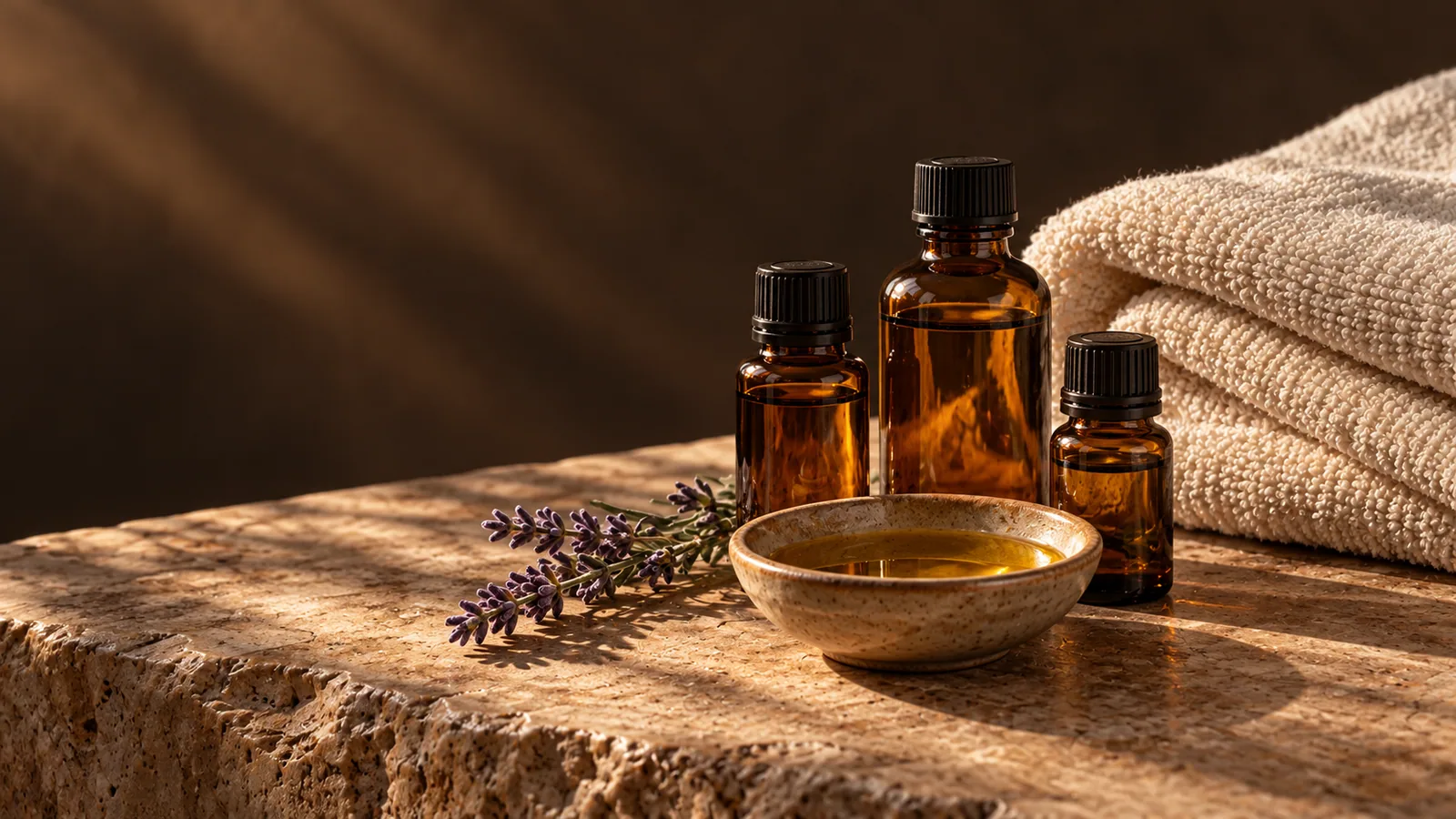
Essential oils are concentrated aromatic substances extracted from flowers, leaves, bark and other parts of plants. Some are obtained using steam, others by pressing. A small bottle may require a considerable amount of plant material; an essential oil therefore differs from an ordinary vegetable oil.
Lavender, lemon, peppermint and tea tree are familiar examples. Each has its own fragrance and chemical composition.
Carrier oil and essential oil: different roles
In a massage blend, the carrier oil helps the hands glide over the skin. The essential oil provides the aromatic component and is usually applied diluted in a suitable carrier. Jojoba and coconut oils are examples of carrier oils; the ingredients of individual products vary.
This distinction also helps explain how the massage feels. Slipperiness and the oily layer left on the skin are separate qualities from the intensity of the scent.
Applying concentrated essential oil directly to the skin can cause irritation. Massage should use a product with known ingredients, formulated for skin application. These products should not be swallowed.
How does scent change the session?
Scent is a personal experience. A fragrance one person enjoys may feel heavy or tiring to someone else. Memories associated with a smell, its intensity and prolonged exposure to it also affect the impression it creates.
As the product is applied to the skin, its scent becomes noticeable. Hand movements, the texture of the oil and fragrance are experienced together. This creates a sensory difference from a similar hands-on massage using an unscented product.
Some people enjoy a light fragrance; others are more comfortable with an entirely unscented massage. Scent is a matter of comfort as well as taste. If it causes a headache, coughing or discomfort, there is no need to force yourself to continue the experience.
Alongside hands-on techniques
The session may include long, gliding strokes, gentle kneading and attention to selected areas. The movements and pressure depend on the centre's approach and the comfortable level agreed beforehand.
When an oil blend provides enough glide for broad strokes, the hands can move smoothly from one area to another. Work on a smaller area brings attention to a more localised sensation. The fragrance accompanies the hand movements.
For example, long strokes along the back may be combined with gentle kneading around the shoulders. The chosen technique and oil blend shape the character of the session.
What is known about lavender?
Lavender is one of the plants often associated with aromatherapy. Many people may find its scent pleasant and relaxing. Enjoying lavender's fragrance, however, is different from saying that it treats insomnia, an anxiety disorder or another illness.
Lavender research has examined different products and methods of use. Findings about a particular preparation taken by mouth cannot be transferred to a massage oil applied to the skin. Better-quality research is needed to draw reliable conclusions about aromatherapy's effects on sleep, stress and other concerns.
Realistic expectations
Aromatherapy massage can be chosen as a restful experience combining a pleasant fragrance with touch. Its value may lie in enjoying the scent, feeling comfortable during the massage and taking a break from the pace of everyday life.
Sensitivity and safety
Disclose previous skin reactions, allergies and sensitivity to scents before the session. Essential oils can cause irritation or allergic reactions in some people. During pregnancy or breastfeeding, or if you take medication, check the suitability of the specific product with a healthcare professional. Stop the application if redness, itching or discomfort develops. Persistent or serious symptoms require medical assessment.