The meaning of “biological points”
In massage services, this phrase may describe focused contact on particular areas of the head. The name alone does not identify a specific school, point map or standard medical procedure. One practitioner may use gentle touch around the forehead and temples, while another uses small circular movements on the scalp. At Mystic Hands, the service is described as focused pressure and massage movements on the head.
Here, point work means contact directed at a small area. Claims that these points can be used to treat internal organs have not been scientifically established.
Touch on the scalp
Scalp massage should work without pulling the hair. Small movements with the soft pads of the fingers can move the skin within a comfortable range. Scratching with the nails, pulling at the roots and rapid friction can make the experience uncomfortable. Hair length, thickness and styling affect how the practitioner makes contact. If hair is tightly tied or held with hard accessories, loosening it beforehand can be discussed for comfort.
The same pressure does not feel pleasant everywhere on the head. Touch that feels comfortable on the scalp may seem too firm on the temples or forehead. The practitioner should adapt pressure when changing areas. There is no need to spend a long time on a sensitive patch of skin. A client can explain which touch is comfortable, decline facial contact and choose to have only the scalp worked on.
Different head-massage formats
Head massage takes different forms in general practice; not all the following variations are necessarily included in a particular service. Some involve light, slow movements around the forehead and temples. Pressure should not be applied to the eyes. Where facial contact is included, makeup and product use are discussed beforehand.
If the neck and shoulders are included, the experience extends to a wider area. Work here may focus on comfortable contact with soft tissues. Sudden neck turns, forceful stretching and trying to make joints crack are not necessary parts of head massage. Stable, comfortable support for the head is particularly important.
Seated and lying-down formats
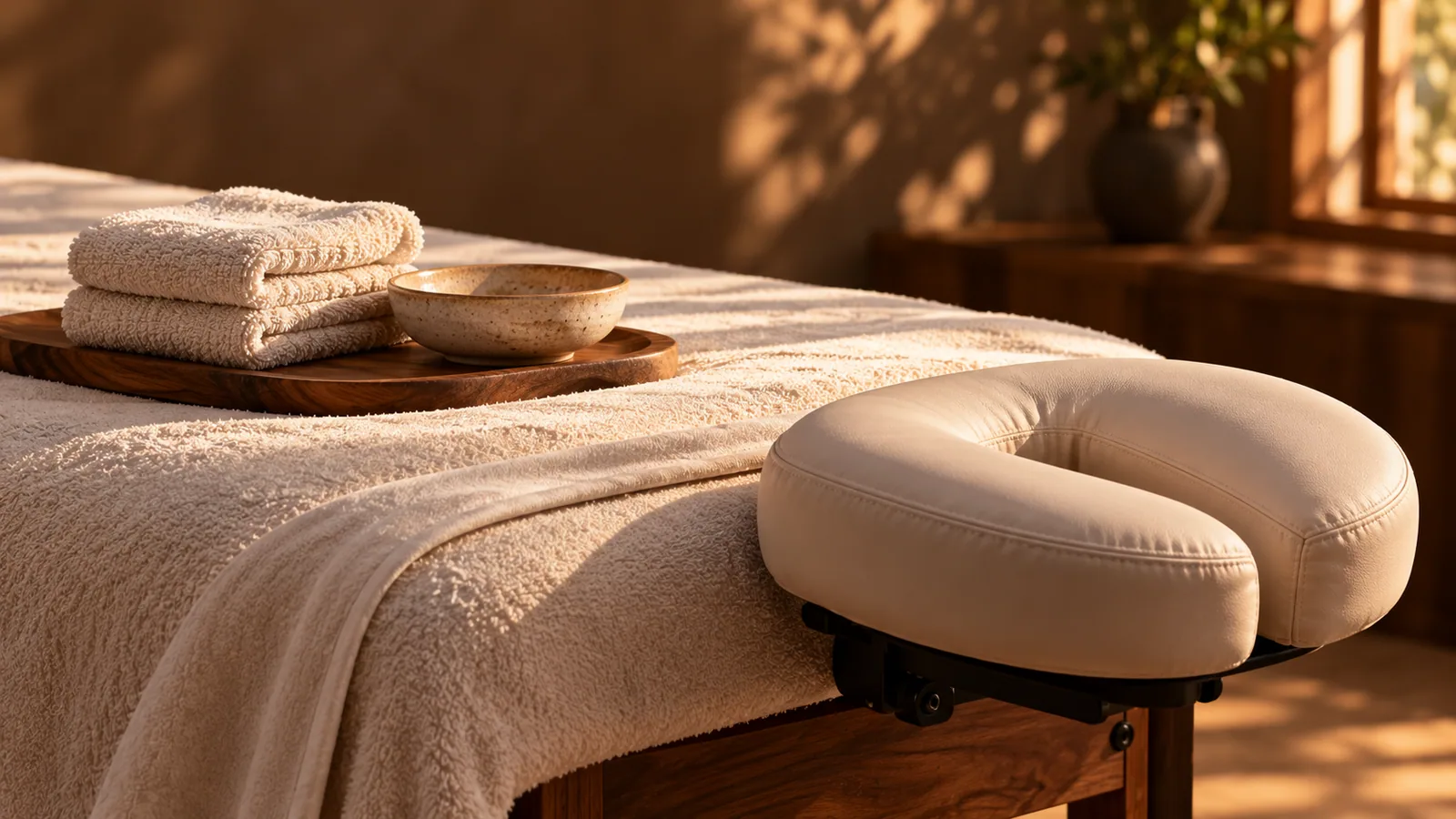
Head massage may take place in a chair or on a massage table. In a seated session, support for the back and arms matters; when lying down, a comfortable neck position is important. The client should not have to hold their own head in position throughout. For example, if keeping the chin close to the chest for a long time feels uncomfortable, the position should change. Maintaining the sequence of a technique is not a reason to stay in an uncomfortable posture.
It should be clear beforehand whether the session covers only the head or extends to the shoulders. A clothing collar may limit access to the neck, but this does not necessarily require extensive undressing. The format, draping and areas to be worked should be agreed in advance.
Using oil
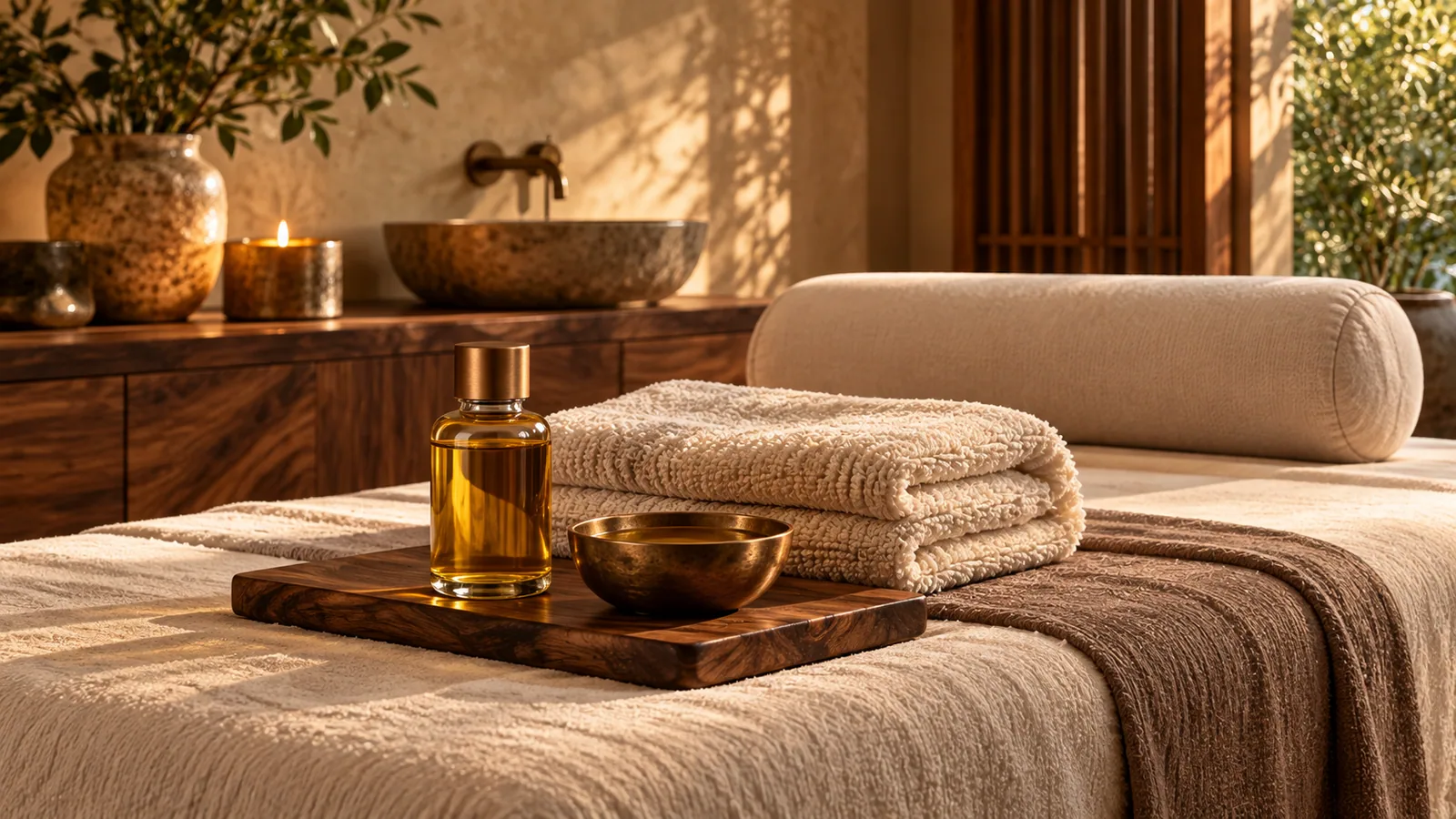
Head massage can be performed without oil. If an oil or another cosmetic product is used, its scent, ingredients and whether it leaves a residue in the hair can be checked beforehand. This is a practical difference for someone going straight back to work or to an appointment. Anyone who dislikes fragranced products or has sensitive skin can ask whether a product-free version is available.
Relaxation and realistic results
Head massage may leave some people feeling calm and rested. Although small studies have examined hair growth and scalp massage, they are not enough to establish that an ordinary spa session treats hair loss or grows new hair. Persistent headaches, migraine and hair loss need separate assessment. Head massage should not replace the main treatment for these concerns.
Considerations before a session
Hair extensions, a recent hair transplant or a recent skin procedure should be mentioned beforehand. Areas with wounds, infection or active irritation should not be worked on. Massage should stop if burning or pain occurs. A sudden, extremely severe headache or disturbances in vision, speech or movement require urgent medical attention rather than massage. In an ordinary relaxation session, the guiding measure is whether the touch remains comfortable. Head massage's distinctive character lies in attentive contact on small areas: working without pulling the hair, supporting the head well and adjusting the rhythm to how the person feels.